The science
The material behind the liner.
A decade of research lead by Imperial College and Harvard-trained engineers.
The material
Hard surfaces meet soft skin.
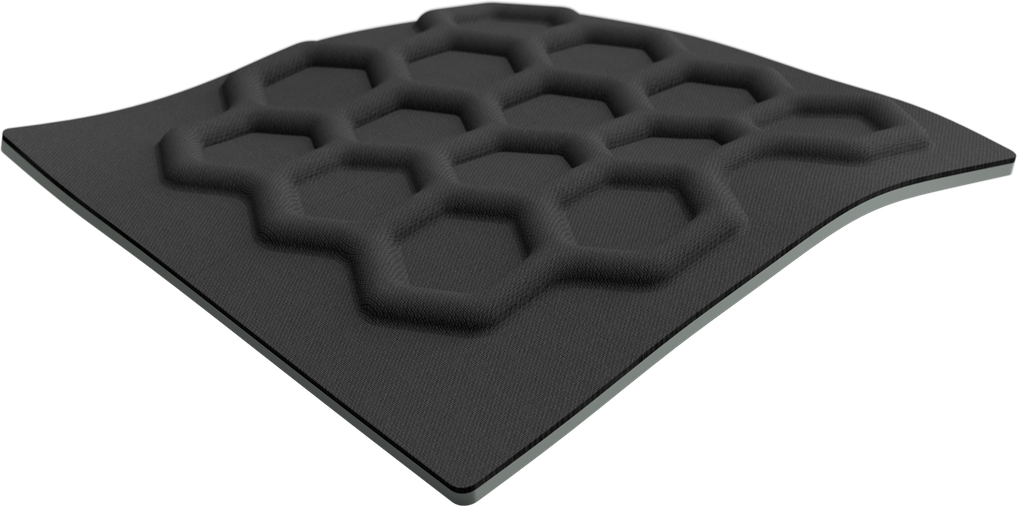
We engineered our proprietary metamaterial so that it responds in real time. It changes shape, its feel on the skin, and pressure distribution. Not passively, but through active, intelligent control. All in soft silicone.
THE RIGID SURFACE
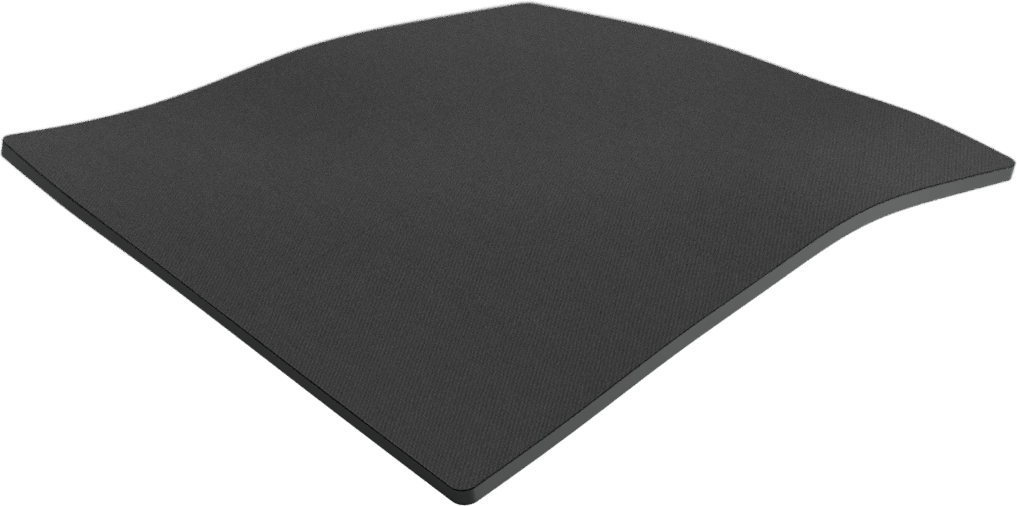
THE SKIN

Clinical value
A new era in prosthetics starts here.
Roliner gives clinicians a window into what was invisible before - the fit, the pressure, the skin. Quiet data, recorded continuously, ready the moment it matters.
Clinician Dashboard
Every patient, at a glance. Fit status, recent adjustments and flagged anomalies - across your whole caseload.
Longitudinal User Data
Pressure, temperature and limb volume, trended over weeks and months. Spot a problem before the patient walks in.
Know When to Replace
Roliner flags when the socket no longer fits - based on real volume change, not a calendar reminder.
Skin-Health Insight
Flagged issues are addressed and resolved sooner, and consistent fitting promotes healthier skin.
Secure Cloud Records
Encrypted in transit and at rest. Data travels with the patient - available only to the authorised clinician.
Fewer Clinic Visits
Routine refits become rarer. Review remotely, adjust remotely - and use clinic time for the cases that need it most.
Clinically proven
The results, in numbers.
We conducted clinical studies from varied backgrounds - age, sex, ethnicity, height and body mass. Each participant was evaluated both objectively, through gait analysis on a motion-capture platform, and subjectively, through the clinically-validated PEQ questionnaire - against their everyday liner.
* Mean stance time across both sides, closer to the 60% able-bodied target.
Gait analysis
How evenly each step bears weight
When a prosthetic feels insecure, the body subconsciously favours the sound leg. The chart shows how much of each step each participant put on the prosthetic side - the able-bodied target is 60%, and Roliner moved 3 of 4 participants closer to that natural balance.
Participant-reported outcomes
PEQ scores across four domains
Cohort mean (n=6), 0–100 scale. Higher is better. Statistically significant improvements were observed across all four domains.
Source: Supplementary Data from the Nature Communications paper - Figure 6b (gait: per-participant stance time) & Figure 6c (PEQ: cohort means, n=6).